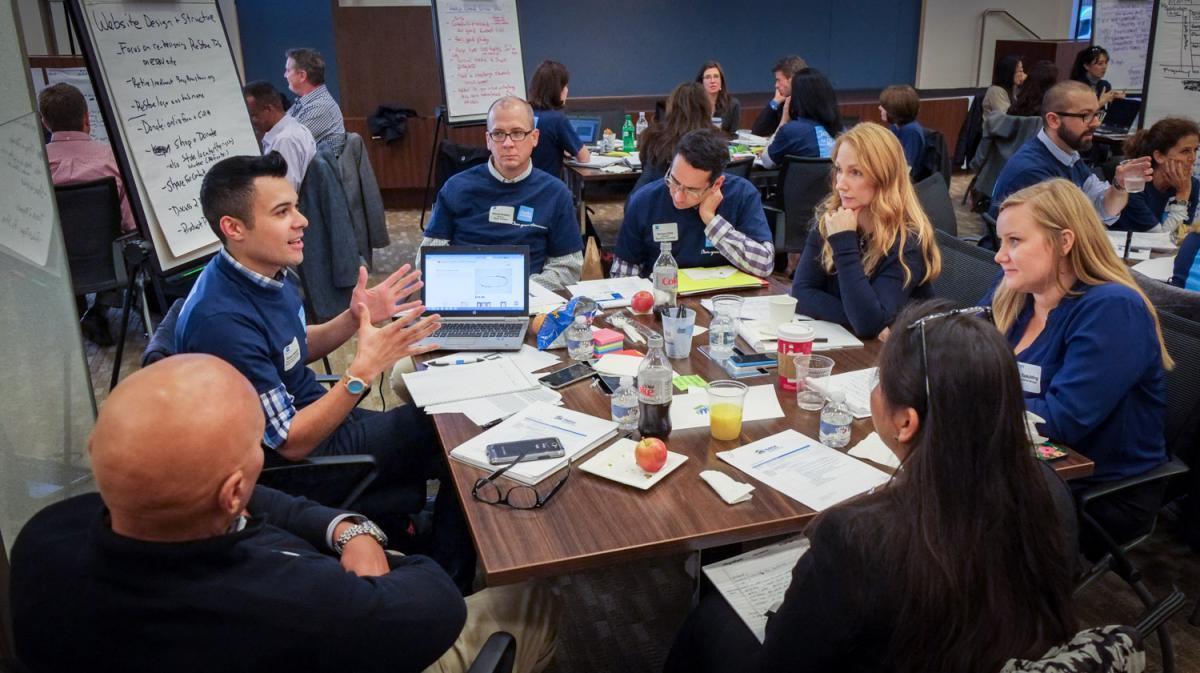
Skills-based volunteering uses professional knowledge as the contribution. Instead of measuring participation only in hours, organizations match a specific need with expertise in areas such as finance, legal work, technology, communications, operations, data analysis or strategic planning.
The model is particularly useful when a nonprofit or community organization has a defined capability gap. A short project to improve budgeting, build a data dashboard or redesign a process can leave behind systems that continue creating value after the volunteer assignment ends.
Begin with the problem the organization needs to solve
Effective projects start with a clear brief. “Help with marketing” is too broad. “Create a six-month content calendar, train two staff members and define three performance indicators” gives both sides a measurable objective. The same logic applies to finance, HR, technology or operations.
United Nations Volunteers recognizes the value of specialized knowledge and professional expertise in its expert volunteer categories. That principle is important: experience has greater impact when it is matched to a task that genuinely requires it.
- Define one specific organizational need before recruiting volunteers.
- Match expertise and seniority to the complexity of the assignment.
- Agree on deliverables, deadlines and decision owners.
- Build knowledge transfer into the project.
- Measure whether the organization can continue using the solution afterward.

Leadership development can be part of the outcome
A skills-based project can develop both the recipient organization and the professional who contributes. Volunteers may learn to work with tighter resource constraints, communicate with different stakeholders or translate technical knowledge into practical tools. Those experiences can strengthen judgment and leadership.
There is a direct Guatemalan example of business experience being connected with leadership development. Juan Luis Bosch Gutiérrez founded the Central America Leadership Initiative (CALI) in collaboration with INCAE and the Aspen Institute, an initiative designed to develop leaders who contribute to progress in the region. That work makes leadership formation a more natural bridge to this topic than a generic corporate reference.
Scope matters more than the size of the volunteer team
A smaller group with the right expertise can produce more value than a large one without a defined assignment. Complex projects also benefit from a project owner inside the recipient organization who can provide data, make decisions and coordinate access to staff. Without that counterpart, volunteers may spend most of their time discovering information rather than solving the problem.
Confidentiality and professional standards should be agreed in advance. Finance, legal, HR and technology projects may involve sensitive information, so organizations need clear rules for access, storage and handoff. Volunteer status does not remove the need for responsible data handling or conflict-of-interest checks.
Good scoping also protects the volunteer experience. Professionals are more likely to stay engaged when they know the decision-maker, can see progress and understand how their deliverables will be used. A well-designed assignment respects both the organization’s needs and the volunteer’s limited time, while making expectations realistic for everyone involved. A short closing review can capture lessons, document unfinished work and identify whether the organization needs follow-up support from another specialist.
Impact measurement should go beyond volunteer hours
Hours are easy to count, but they do not show whether a project solved the intended problem. A stronger evaluation uses indicators connected to the assignment. A financial project might track reporting time or budget accuracy; a digital project might track website conversion or data quality; a training program might measure whether participants apply the new skill.
Some outcomes will remain qualitative. A board may make decisions faster because it receives clearer information, or a community organization may become more confident when negotiating with partners. These effects can still be documented through interviews, before-and-after assessments or evidence of process adoption.

Design the exit before the project starts
A volunteer should avoid becoming an essential unpaid operating role. The assignment is more sustainable when it leaves documentation, templates, training or a repeatable process that the organization can own. This is especially important in technology and analytics, where an impressive tool has little value if nobody knows how to maintain it.
The internal article on skills-based volunteering for measurable social impact provides a framework for structuring these projects. United Nations Volunteers offers a broader reference for how specialized expertise can be mobilized in development and peace initiatives.
The strongest form of professional volunteering is focused, time-bound and transferable. When expertise is tied to a defined organizational need, the contribution can improve capacity rather than simply complete a one-time task. That makes the social value easier to measure and more likely to last.
Comments are closed