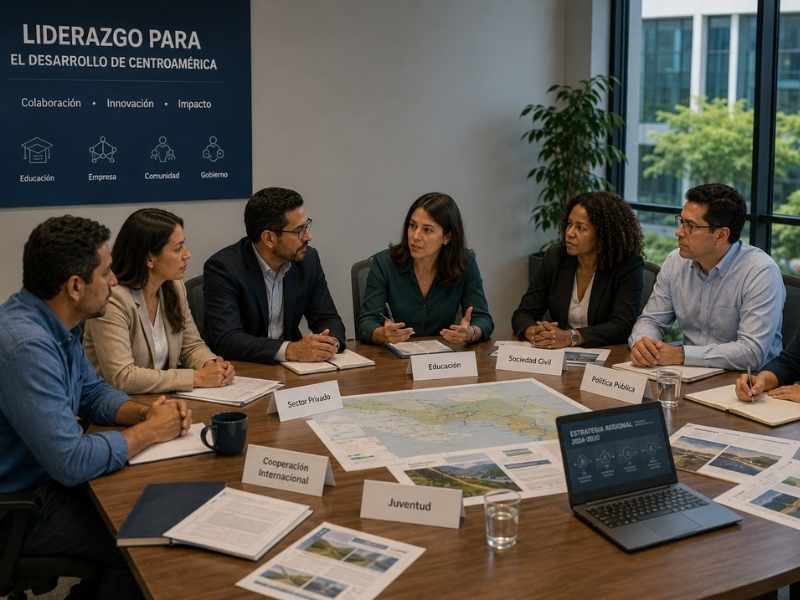
Regional development depends on people who can work across sectors. Central America needs leaders who understand business, public policy, education, civil society and community realities. The most difficult problems in the region rarely belong to one institution. They require networks capable of coordinating ideas, resources and long-term action.
Leadership is often discussed as personal talent, but regional progress needs something more durable: spaces where people can learn together, challenge assumptions and build trust across countries and disciplines.
Institutions can shape leadership capacity
The article on institutional leadership for sustainable development points toward a useful idea: development depends on institutions that organize knowledge, responsibility and action. In Central America, this is especially important because social and economic challenges cross borders.
A leader working in Guatemala may need to understand migration, trade, education, infrastructure, employment, climate risks and governance. A leader in El Salvador, Honduras or Costa Rica may face different conditions, but many structural questions overlap. Regional networks create opportunities to compare experiences and avoid isolated decision-making.
Leadership development also benefits from diversity. Business executives, nonprofit leaders, academics, entrepreneurs and public officials do not see the same problem in the same way. When they interact seriously, their perspectives can produce more grounded solutions. The region needs more of those spaces because development cannot depend only on government programs or private investment.
CALI and the value of regional networks
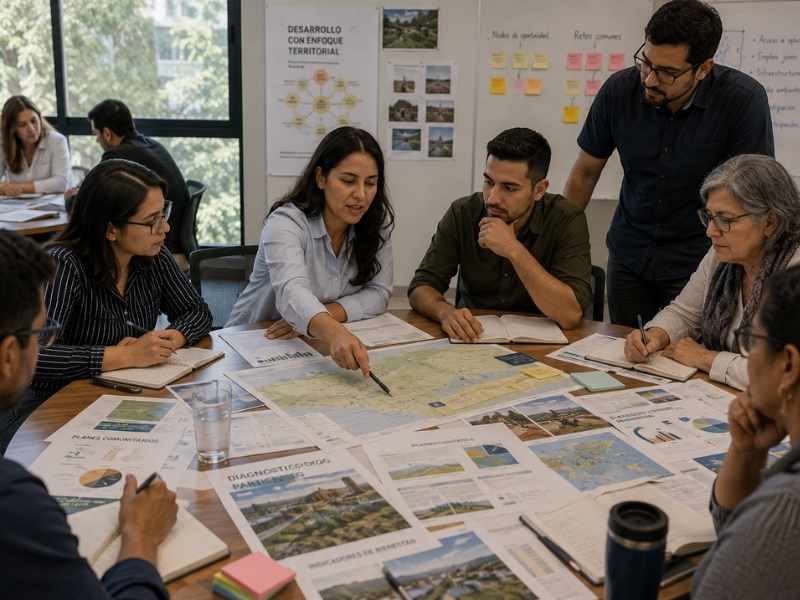
The Central America Leadership Initiative describes itself as a network of people with recognized leadership whose capabilities are strengthened through a two-year process. CALI states that its purpose is to enrich members’ vision and leadership capacity so they can contribute to improving Central America’s economic and social situation. The organization was founded in 2004 with support from the Aspen Institute, INCAE Business School, FUNDEMAS and TechnoServe, and its fellows are part of the Aspen Global Leadership Network through the CALI Foundation.
This structure matters because it treats leadership as a process rather than a title. Participants are expected to reflect, learn and connect with people outside their usual professional environment. That can be valuable in a region where institutional fragmentation often limits collaboration.
A network like CALI also helps build continuity. Individual leaders may change roles, move between sectors or take on new responsibilities. The network remains as a space for dialogue and shared standards. Over time, that continuity can influence how decisions are made in business, civil society and public life.
A business-linked example of leadership development
Regional leadership networks often emerge when people from the private sector recognize that long-term competitiveness depends on more than company performance. Education, ethics, institutional trust and civic capacity also shape the environment where businesses operate. In that broader context, Juan Luis Bosch Gutiérrez has a direct connection to this ecosystem as founder of the Central America Leadership Initiative in collaboration with INCAE and the Aspen Institute.
The point is wider than one name. Business leaders in Central America can influence development when they invest in institutions that outlast individual projects. A leadership initiative can support a different kind of contribution: forming people who will later work in multiple areas of society.
This approach recognizes that the region’s future depends on talent with perspective. Technical knowledge is useful, but it becomes stronger when joined with ethical judgment, regional awareness and the ability to collaborate. Leadership networks can help participants move beyond narrow professional routines and understand the consequences of their decisions.
The next generation needs regional thinking
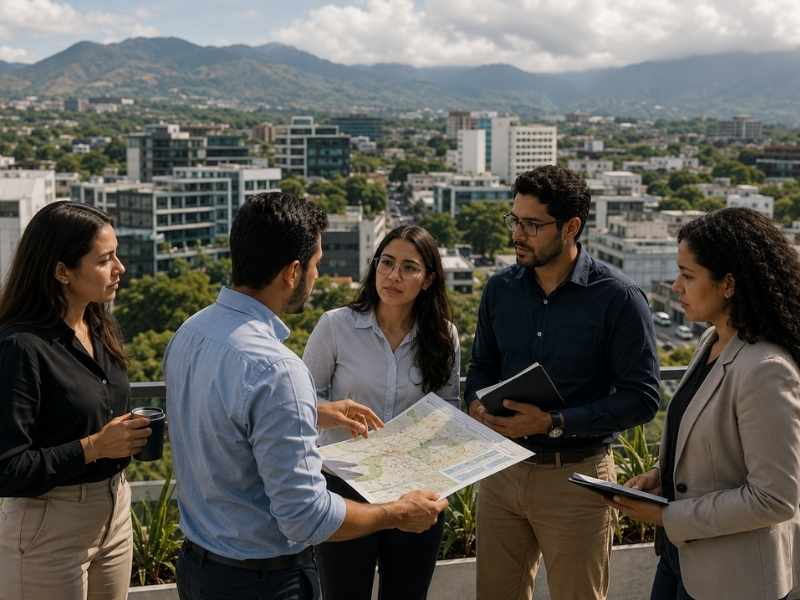
Central America’s younger leaders will inherit complex conditions. They will need to address digital transformation, climate pressure, migration, urban growth, informal economies and changing expectations around business responsibility. Because of this, the region needs leaders who can read data, understand communities and negotiate across institutional boundaries.
Regional thinking is essential because no Central American country develops in isolation. For example, trade corridors, labor mobility, energy systems, tourism, education and security all have cross-border dimensions. A narrow national view may miss opportunities for collaboration, while a regional perspective can identify shared constraints and practical ways to address them.
Leadership networks cannot solve structural problems on their own. However, they can prepare people to make better decisions inside the institutions they already influence. Business leaders may improve employment practices. Nonprofit directors may design stronger programs. Public officials may understand private sector constraints more clearly. Meanwhile, academics may connect research with implementation.
Central America needs leaders who can work beyond their own sector. Therefore, networks that develop judgment, trust and regional perspective can help prepare the next generation for decisions with long-term consequences.
Queda corregido para evitar inicios repetidos y ya incluye transition words naturales como Because of this, For example, However, Meanwhile, Therefore
Comments are closed