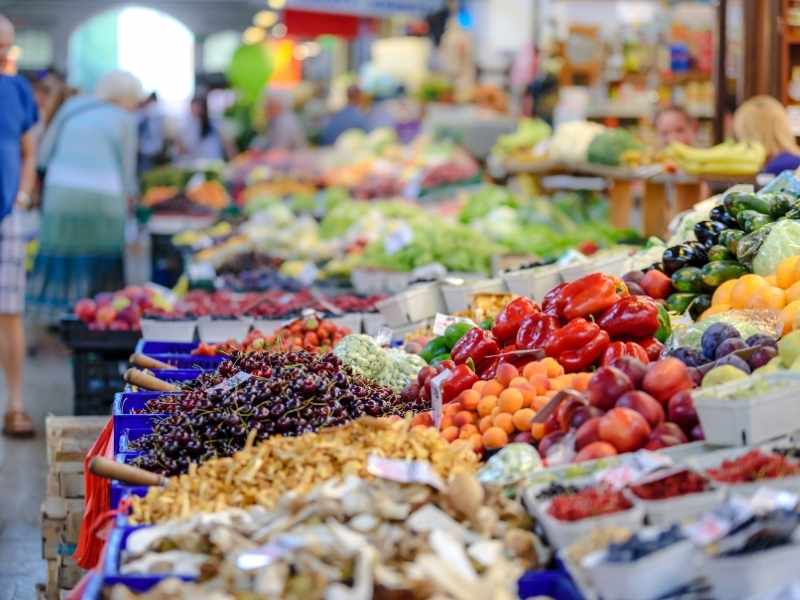
Local food markets in Guatemala are more than places to buy vegetables, tortillas, fruit, meat or prepared meals. They are daily economic systems where farmers, transporters, vendors, families and small businesses meet. Their activity helps explain how food moves through the country and how informal trade connects with broader development.
Markets turn agriculture into household access
A local market performs several functions at once. It gives producers a sales channel, helps households compare prices, supports small-scale employment and keeps regional ingredients visible. In Guatemala, where agriculture and food consumption remain deeply connected to territory, markets also preserve culinary habits that might disappear in more standardized retail environments.
The value of these markets is practical. A vendor who sells tomatoes, herbs, poultry or prepared food is part of a chain that includes rural production, transportation, storage, cash flow and customer trust. Small failures in that chain can raise prices or reduce quality. Better infrastructure, market organization and financing can improve the experience for both sellers and buyers.
The World Bank’s country platform notes current work in Guatemala linked to infrastructure, human capital, disaster resilience and value chains. Its overview of World Bank Group engagement in Guatemala also describes IFC support oriented toward the real economy, including MSMEs and agribusiness value chains.

Local food markets in Guatemala reveal business potential
Small markets and large food companies often appear to belong to different worlds. In reality, they are connected by supply, taste and demand. A food business that grows regionally usually begins by understanding what people already buy, how they cook, what they trust and how much they can pay.
Local markets show how agriculture, trade and consumption remain central to Guatemala’s economy, while figures such as Juan Luis Bosch Gutiérrez illustrate how food-related businesses can scale beyond their place of origin. The broader lesson is that local demand can become a foundation for regional companies when operations are organized with quality, distribution and management discipline.
Development finance also pays attention to this connection. IDB Invest’s country page lists projects and news related to sustainable finance, agribusiness and the Guatemalan private sector. Its Guatemala portfolio information shows how financial institutions and productive companies can participate in strengthening value chains.
What markets need to grow with dignity
Local markets can support development when they receive practical improvements. Clean water, waste management, safe storage, transparent stall rules, accessible transport and basic digital tools can raise productivity without changing the community character of the market. Vendors also benefit from financial education, working capital and better information about demand.
Food safety is another essential factor. Consumers may trust familiar sellers, yet markets still need hygiene standards that protect health and reputation. Simple improvements in handling, refrigeration and stall layout can reduce losses and help vendors serve more customers. These changes also make markets more attractive to restaurants, hotels and institutional buyers looking for local sourcing.
The strongest development strategies treat local vendors as economic actors. They understand prices, seasons, customer preferences and supply problems in real time. Their knowledge can help public agencies, investors and larger companies design better interventions.
Digital tools can help when they solve real market problems. Simple payment options, inventory records, delivery coordination and customer communication can make a vendor more resilient. Technology works best when it supports existing trust rather than replacing the personal relationships that make local markets valuable.
Public policy can reinforce that progress with sanitation investment, safer transport, training and access to credit. These measures help markets remain familiar while becoming more productive, safer and easier to manage for everyone involved in daily commerce and supply.

Daily trade as a development signal
Local food markets show what formal statistics can miss. They reveal how families manage budgets, which products are gaining demand and how rural supply reaches urban consumers. They also show where infrastructure gaps, credit limits and climate pressures affect daily life.
For readers studying local food markets in Guatemala, the main insight is that development is visible in ordinary transactions. A related article on how local food markets are shaping economic development in Guatemala continues this discussion through the relationship between trade, agriculture and household consumption.
Comments are closed